
Project Makeover
Magic Tavern, Inc.Casual
4.549.32K Reviews
- Version
- 2.146.1
- Installs
- 100.00M
- Age Rating
- Everyone
Screenshots


Our Review of Project Makeover
 Analysis by Appyee
I find Project Makeover works best as a shared-device game when everyone understands that its progress belongs to the person playing, rather than becoming a group project by default. A child might enjoy choosing a character’s look, while an adult may prefer the match-3 puzzles; taking turns can be fun, but agreeing who gets to make the final styling choices avoids the small household debate of undoing one another’s decisions.
A game that suits short visits
The makeover format makes it easy to hand the phone over for a quick turn: one person can try a puzzle, then another can look at the outfit or room choices. That makes it a natural fit for a quiet stretch at home, such as waiting for dinner or relaxing together after chores. I would not treat it as a cooperative game with a shared objective, though. The appeal is in making choices and watching the result, so a turn-taking arrangement works better than expecting everyone to control the same makeover at once.
For a calmer shared session, I’d let the current player finish a puzzle before passing the device over. Match-3 boards require attention, and switching hands in the middle of a move can make the game feel more frustrating than social. The styling decisions are easier to discuss as a group: someone can suggest a look, while the person holding the device decides whether to use it. That keeps the conversation light without turning every choice into a vote.
Keep progress and spending boundaries clear
On a shared phone or tablet, the first practical question is whose game progress is being used. I recommend deciding that before anyone starts: one person can be the regular player, with others taking occasional turns, rather than treating the game as a rotating household save. That simple boundary matters in a game built around completing puzzles and making a sequence of makeover choices. A second player may enjoy browsing the options but not want to inherit the first player’s decisions.
The game is free to download, but it includes optional in-app purchases priced from $0.99 to $99.99 per item. I’d make the device owner’s purchase expectations clear before handing it to a child or guest, and use the device’s own purchase safeguards where appropriate. The presence of optional purchases does not mean anyone has to spend to try the game, but it does mean a shared device deserves a clear rule: no purchase without the account holder’s permission. That is more useful than assuming every player will interpret a purchase prompt the same way.
There is also a practical distinction between sharing a screen and sharing an account. If several people use one device, avoid casually passing around account credentials or assuming progress will follow each person between devices. I would keep the arrangement simple and let the person responsible for the device manage its settings. For a household where several players want separate progress, a game that clearly supports distinct profiles would be a better fit than relying on informal turn-taking.
How to coordinate choices without spoiling the fun
One small approach I like is to let the player choose the makeover direction first, then invite suggestions for one detail, such as a hairstyle or a room color. It preserves the feeling of personal taste while giving other people a way to join in. If the group wants to compare options, pause at a decision point rather than interrupting a puzzle; that keeps the two halves of the game from competing for attention.
It also helps to distinguish between a quick visit and a longer play session. A person who only wants to see the character transformations may lose interest if they have to spend most of their turn working through puzzles first. In that case, let them watch or advise while the regular player handles the board. Someone who enjoys matching games can take a proper turn and decide how to spend the resources they earn. The game is more welcoming when each person can enjoy the part they actually like, without pretending both activities will appeal equally to everyone.
Age, trust, and the right household fit
Its Everyone content rating makes the game approachable for a broad audience, and its fashion-focused presentation can be an easy starting point for a parent and child to talk about color, clothing, and room design. I would still consider a child’s maturity and the household’s rules around screen time and purchases. An age label is a useful guide, not a substitute for an adult deciding what is suitable for a particular child or for checking the device’s purchase settings.
Magic Tavern, Inc. is the developer, and the game has a 4.5 average from around 1.2 million ratings, with over 100 million installs. Those figures suggest it has reached a very large audience, but they do not tell me whether a particular household will enjoy its mix of puzzles and makeover choices. I’d focus instead on whether the likely player likes both parts, can handle a gradual increase in puzzle difficulty, and is comfortable with a game that encourages returning to continue its progression.
If a child mainly wants unrestricted dress-up, a simple creative game may be a better match; if an adult wants a pure puzzle challenge, a match-3 game without makeover interludes may feel more direct. This one sits between those familiar options. Its advantage is the change of pace between solving a board and seeing a character or room develop. Its trade-off is that someone who dislikes either half may feel held up by the other.
Getting Started with Project Makeover
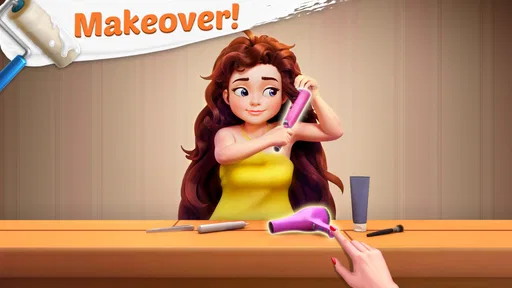
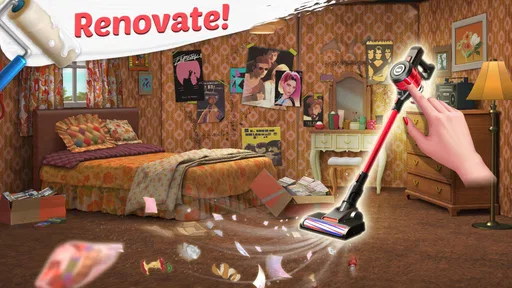
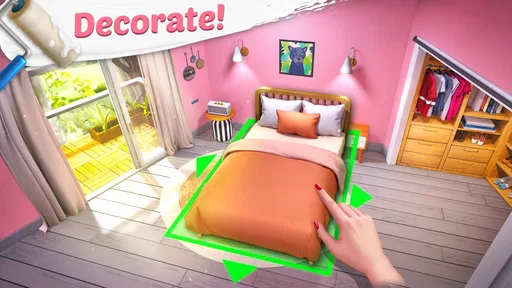
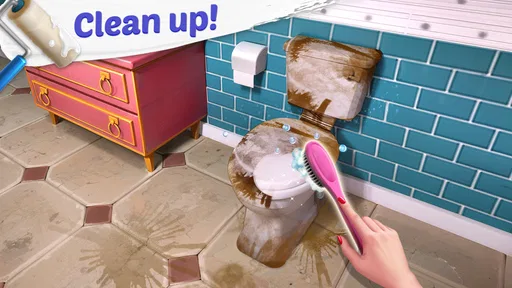
Jumping into Project Makeover is like stepping onto the set of a reality TV show. You’re greeted by characters who are looking for a serious style overhaul, and it’s your job to make their dreams come true. The interface is user-friendly, and it didn’t take me long to get the hang of things. The game starts with a quick tutorial that walks you through the basics of selecting outfits, hairstyles, and even redecorating rooms. I felt like a fashionista in no time!
The Addictive Puzzle Element
Now, here’s where it gets really interesting. To earn the resources needed for these makeovers, you have to play match-3 puzzles. If you’ve played games like Candy Crush, you’ll feel right at home. The puzzles start off simple but gradually become more challenging, which is a great way to keep the game engaging. I found myself saying, "just one more level," more times than I'd like to admit. The balance between puzzle-solving and makeover tasks is well-executed, keeping the gameplay fresh and exciting.
That link between puzzles and decorating is the key to deciding whether the game suits you. If you hit a board that takes several attempts, the makeover side may have to wait, so I wouldn’t pick it when I want immediate, uninterrupted creative control. I also find it useful to treat each puzzle as its own short session rather than promising myself a full makeover in one sitting. That expectation makes a difficult board less likely to sour the whole experience.
Design and Fashion
The design aspect of the game is where your creativity can shine. From selecting the perfect outfit to choosing the right shade of paint for a room, Project Makeover gives you a lot of freedom. I enjoyed experimenting with different looks and styles. The game offers a wide range of clothing options and decor items to choose from, which means you can personalize each makeover to your taste. It's satisfying to see the transformations unfold and know that you had a hand in it.
My practical tip is to choose a look that feels coherent rather than trying to make every individual item stand out. A bold outfit can be fun, but a matching room choice may make the finished transformation feel more intentional. If you’re playing with someone else, agree on the overall mood first—bright, polished, or more understated—then pick the details. That gives the discussion a useful focus and avoids spending the whole turn debating unrelated options.
Characters and Storylines
One of the highlights for me was the quirky cast of characters. Each one comes with their own backstory and reasons for needing a makeover. The narratives are light-hearted and sometimes even a bit dramatic, adding an entertaining layer to the game. I found myself invested in their stories, eager to see their transformations and where the plots would lead. It’s like watching a mini soap opera unfold, with each character bringing something unique to the table.
The stories also give the makeover choices a little context, which is why I find them more engaging than simply opening a clothing catalog and dressing a model. Still, players who prefer to create their own characters or invent a story from scratch may find this more guided approach limiting. The fun comes from responding to the people and situations the game presents, not from building an entirely personal world.
Visuals and Sound
Visually, Project Makeover does not disappoint. The graphics are vibrant and colorful, perfectly capturing the fun and whimsical nature of the game. The characters are well-designed, and the animations are smooth. As for the sound, the background music is catchy without being intrusive, and the sound effects add a nice touch to the overall experience. It’s a game that’s as pleasing to the ears as it is to the eyes.
For a shared living room, I’d keep the sound at a level that suits everyone nearby; the music and effects are part of the presentation, but a quiet setting may call for playing with the volume low. The colorful look is easy to follow on a small screen, while the makeovers are enjoyable to watch together. That makes it a better casual spectator game than a puzzle that demands everyone stay silent and concentrate, though the person making moves still needs room to focus.
My Final Thoughts
Overall, Project Makeover is a delightful mix of puzzles, fashion, and storytelling. It’s a game that doesn’t take itself too seriously, which makes it perfect for unwinding after a long day. Whether you’re a fan of puzzles, a budding fashionista, or just looking for a fun way to pass the time, this app is definitely worth checking out. Just be warned, it’s highly addictive!
In practical terms, I’d recommend it to someone who likes alternating between a match-3 challenge and making visual choices, especially if they enjoy character-led stories. I’d skip it if I wanted a completely open-ended styling tool, a serious puzzle-only experience, or a game that several household members can treat as separate personal projects on one shared account. The current version is 2.132.1, and the game is free, so it is easy to try before deciding whether that blend is worth keeping on your device.
If you’re ready to dive into makeovers and puzzles, you can download Project Makeover from the App Store or Google Play. Happy styling!
Verdict
Strengths of Project Makeover
- Engaging storyline with frequent updates.
- Diverse character customization options.
- Smooth graphics and vibrant visuals.
- Addictive gameplay with varied challenges.
- Integrates social features for team play.
Limitations of Project Makeover
- In-app purchases can be quite expensive.
- Some levels may feel repetitively difficult.
- Requires a stable internet connection.
- Advertisements can interrupt gameplay.
- Limited energy can slow down progression.
Other Releases by Magic Tavern, Inc.
View All
Matchington Mansion
Puzzle4.4

Modern Community
Casual4.7
Similar Picks in This Category
View All
My Talking Angela
Outfit7 Limited4.2

My Talking Tom
Outfit7 Limited4.3

Pou
Zakeh4.2

My Talking Tom 2: Pet Game
Outfit7 Limited4.3

Candy Crush Saga
King4.6

Bridge Race
Supersonic Studios LTD4.1
You May Also Like
View All

Frequently Asked Questions
What is Project Makeover about?
Project Makeover is a mobile game where players assist characters in transforming their lives through fashion, makeup, and home renovation. Players complete various puzzles to earn resources, which can be used to update the characters' looks and living spaces. It combines elements of match-3 puzzles with a narrative-driven makeover experience.
Is Project Makeover free to play?
Yes, Project Makeover is free to download and play on both Android and iOS devices. However, it offers in-app purchases that can enhance gameplay, such as additional lives or special boosters, which can be bought with real money. Players can enjoy the game without making purchases, though progress might be slower.
What kind of in-app purchases are available in Project Makeover?
In-app purchases in Project Makeover include options for buying coins, gems, and special boosters. These purchases can help players overcome challenging levels or speed up their progress. While these items provide convenience, they are not mandatory to complete the game, allowing players to progress at their own pace.
Does Project Makeover require an internet connection to play?
Yes, an internet connection is required to play Project Makeover. This connection allows for the synchronization of game progress across devices, access to special events, and updates. Players can enjoy a seamless experience, but should be aware that playing without an internet connection might limit certain features.
Can I play Project Makeover across multiple devices?
Yes, Project Makeover supports cross-device play. By connecting the game to a social media account like Facebook, players can sync their progress across multiple devices. This feature ensures that players can continue their makeover journey seamlessly, whether on a smartphone or tablet.
Play our best games!


